
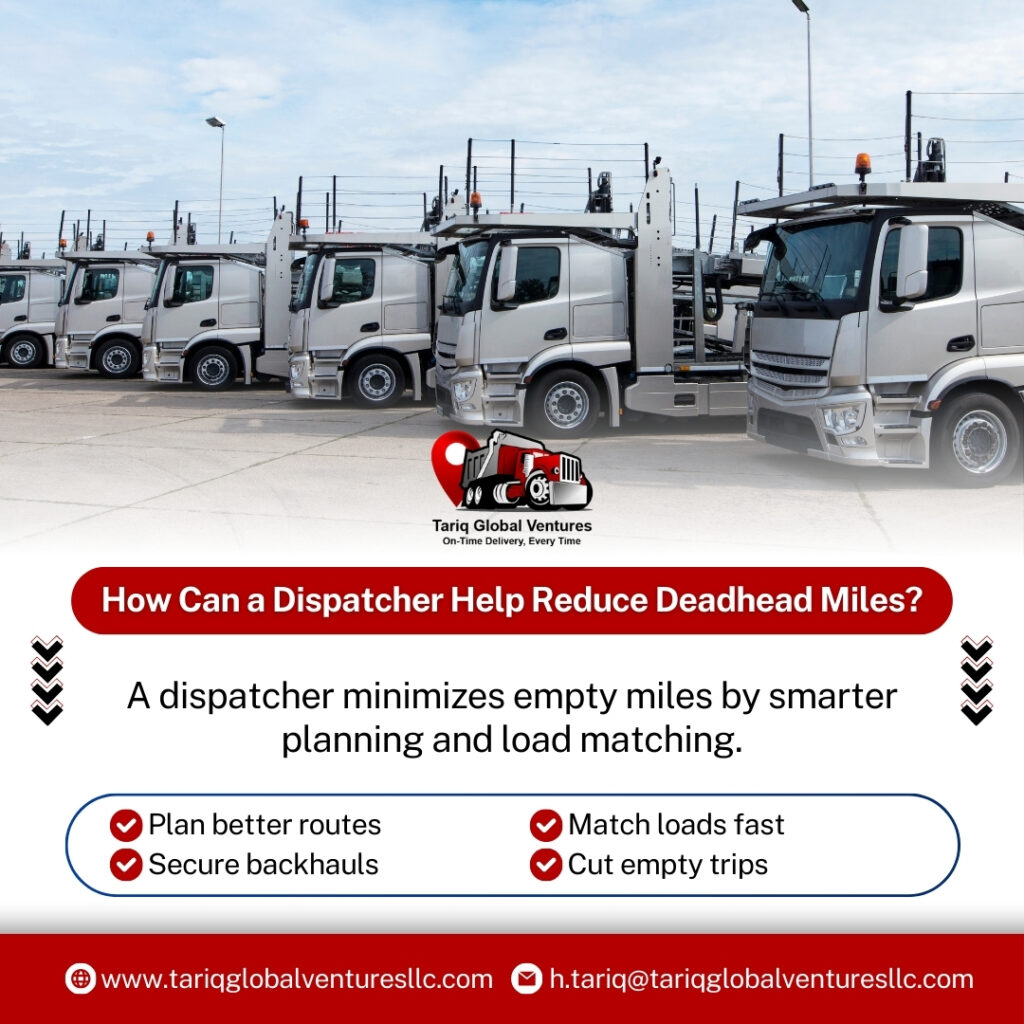
In trucking, deadhead miles refer to when a truck drives without carrying a load. These empty miles waste fuel, increase wear and tear, and eat into profits. Reducing deadhead is one of the best ways to keep your business more efficient and profitable. This is where a dispatcher can make a big difference.
Thank you for reading this post, don't forget to subscribe!How Dispatchers Reduce Deadhead Miles
1. Advance Load Planning
Dispatchers secure back-to-back loads so you don’t have long gaps between deliveries.
2. Keeping Drivers in Freight-Rich Areas
They guide drivers toward lanes and regions where freight is more available, avoiding “dead zones.”
3. Finding Nearby Reloads
Dispatchers use multiple load boards and broker connections to find freight close to your drop-off location.
4. Negotiating with Brokers
By leveraging relationships, dispatchers often arrange reloads that reduce unnecessary empty travel.
5. Optimized Routing
They plan efficient routes that line up future loads, keeping trucks moving with minimal empty miles.
FAQs
Deadhead miles are the distance a truck travels without carrying any freight, usually after dropping off a load.
Because drivers spend fuel, time, and wear on the truck without earning money.
By planning loads ahead of time, finding nearby reloads, and keeping you in strong freight lanes.
Yes. They rely on multiple load boards, broker networks, and route-planning tools to minimize empty miles.
Absolutely. Since new carriers often struggle to get consistent freight, dispatchers are especially helpful in reducing downtime and empty runs.